Best Quiet Compost Bin: Epica Leads the Set

Five compost bins compared for kitchen noise, capacity and filter life. Sealed steel wins for most households, but a 4L electric pick suits scrap-heavy weeks.

By Aidyn MeadowsUpdated 15 min read
On this page
- How I cut the field down to five
- Best quiet compost bin at a glance
- Why 'quiet' means two different things here
- 1. Epica Kitchen Compost Bin — Best overall
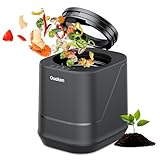
- 2. Ouaken OK-255 Electric Composter for Kitchen 5.5L — Best premium
- 3. Ouaken 4L Electric Composter for Kitchen — Runner-up
- 4. Utopia Kitchen Countertop Compost Bin 1.3 Gallon — Best budget pick
- 5. KEEPEEZ 1 Gallon Electric Composter with Smart Touch — Best for beginners
- How long does a charcoal filter actually last?
- Sealed steel vs electric: which suits your kitchen?
- What the listings won't tell you about capacity
- Who should skip a countertop bin entirely?
- The verdict
- FAQ
The best quiet compost bin for most kitchens is the Epica 1.3-gallon stainless steel bin, a passive countertop container measuring 11 x 7.16 x 7.16 in with a sealed lid and a replaceable charcoal filter. Buyers running a full electric cycle every day will do better with the Ouaken OK-255, a 22.1 lb machine with five operating modes and a stated iodine-value carbon filter.
How I cut the field down to five
I started with a wider list of countertop compost bins and pulled the ones where the published data actually let me judge noise. Two categories survived: sealed passive bins that store raw scraps under a charcoal filter, and electric composters that grind and dry food waste in a closed chamber. Both can be quiet, but for opposite reasons.
Three listings were cut for missing specifications on either weight or dimensions, which made cross-comparison unreliable. The five that remain publish enough hard data to compare on size, capacity claim and filter type, and every one of them addresses odour and enclosure in its feature bullets. That is what a shopper looking for a best quiet compost bin actually needs to weigh.
Here's the trick with this category: passive bins are silent by design, so the noise question shifts to the lid seal and the filter. Electric bins have a motor, so the noise question becomes how the manufacturer describes the running sound and how big the machine is. The set below covers both routes.
Best quiet compost bin at a glance
| Pick | Type | Capacity | Weight | Price |
|---|---|---|---|---|
Best overall Epica Kitchen Compost Bin |
Passive stainless steel | 1.3 gal | 0.28 g listed | Check Price |
Best premium Ouaken OK-255 Electric Composter 5.5L |
Electric, 5 modes | 5.5 L | 22.1 lb | Check Price |
Runner-up Ouaken 4L Electric Composter |
Electric, 3-hour cycle claim | 4 L | 15.8 lb | Check Price |
Best budget pick Utopia Kitchen Countertop Compost Bin |
Passive stainless steel | 1.3 gal | 2 lb | Check Price |
Best for beginners KEEPEEZ 1 Gallon Electric Composter |
Electric, 2 modes | 1 gal | Not listed | Check Price |




Why 'quiet' means two different things here
A best quiet compost bin means one of two things depending on which half of this set you land in. For the two passive bins, quiet is a matter of the lid seal: no motor runs, so the only sound is the lid closing. For the three electric units, quiet is a claim the manufacturer makes about the running motor, and you should treat it as a claim rather than a measurement.
KEEPEEZ describes its 1 Gallon Electric Composter as "whisper-quiet" in the listing, and Ouaken says the 4L model runs an "odor-free composting" cycle over three hours. Neither figure comes with a decibel number, so the honest read is that these units are quiet compared with a garbage disposal, not silent compared with a sealed steel pail.
The deciding question is simple. If you want zero acoustic footprint, buy passive: nothing beats a lid that does not need power. If you want the food waste reduced to a dry, small volume before you empty it, buy electric and accept a running noise you cannot verify from the listing alone.
1. Epica Kitchen Compost Bin — Best overall
A silent, sealed stainless steel bin at a size that suits most home counters.
Best for: small kitchens that want zero motor noise and a sealed lid. Skip it if: you generate more than a week of scraps between empties.
Epica's countertop bin is the pick for anyone who reads "quiet compost bin" and means literally quiet. It's a one-piece stainless steel container measuring 11 x 7.16 x 7.16 in with an airtight lid and a replaceable activated-charcoal filter. There is no motor, no cycle, and no running sound of any kind.
Epica says the charcoal filter lasts three to six months with proper care, which is the longest published filter life in this set of five. The one-piece moulded body is designed to resist rust and leaks, and Epica says it hand-washes with warm water. In the context of the wider set, it's the second-cheapest here, and it sells faster than either Ouaken unit or the KEEPEEZ.
Trade-off against the electric picks: a passive bin holds raw scraps rather than reducing them, so a 1.3-gallon volume fills faster than the finished output from a 4L electric run. If your household clears the bin twice a week, that is not an issue. If you compost every meal, a machine wins on volume.
Pros:
- Silent by design, no motor at all
- Sealed lid with replaceable charcoal filter
- Filter life of 3 to 6 months per the listing
- One-piece stainless steel body
- Sells faster than the rest of this set
Cons:
- No scrap reduction, only storage
- 1.3 gal fills quickly in a scrap-heavy kitchen
- Only one seller lists it
2. Ouaken OK-255 Electric Composter for Kitchen 5.5L — Best premium
The biggest electric composter in the set, aimed at households that fill a bin every day.

Best for: larger households running a full compost cycle every day. Skip it if: you want silent, non-electric operation on the counter.
The OK-255 is the most expensive pick here and by some distance the heaviest at 22.1 lb, with a 14 x 15.9 x 10.3 in footprint. Ouaken lists five operating modes: Standard, Quick, Crush, Clean and Store. Each is a button press on the front panel. In practice, the mode you'll use most is Standard, with Store keeping the chamber sealed between runs so you can batch a day of scraps before starting a cycle.
Ouaken describes the odour control as an "upgraded" system using a higher iodine value activated carbon filter and a redesigned airflow structure. Iodine value is a lab measure of a filter's adsorption capacity, and a higher number means more surface area for odour molecules; Ouaken does not publish the actual figure, so treat this as a claim. The blade assembly and 9H hardness non-stick coating are also manufacturer language for reduced residue buildup between runs.
Against the smaller 4L Ouaken, the OK-255 buys you 1.5L of extra chamber volume, a Clean mode, and a heavier build. Against the passive picks, you get scrap reduction at the cost of motor noise you cannot verify from the listing.
Pros:
- Largest capacity in the set at 5.5L
- Five operating modes including Store and Clean
- Higher iodine-value filter claim
- 9H hardness non-stick coating claim
Cons:
- Most expensive pick here
- 22.1 lb makes it hard to move
- No published decibel figure
- Slowest seller of the five
3. Ouaken 4L Electric Composter for Kitchen — Runner-up
A smaller, cheaper electric option from the same brand, sized for a family of four.

Best for: a family of four wanting a 3-hour electric cycle in a compact footprint. Skip it if: you cannot spare 12.8 x 10.4 x 13.3 in of counter space.
The 4L Ouaken sits between the OK-255 and the KEEPEEZ. It weighs 15.8 lb, measures 12.8 x 10.4 x 13.3 in, and Ouaken says it reduces food waste by up to 90 percent within three hours using high-temperature drying, grinding and cooling. The interface is a touch panel with a transparent lid so you can watch the cycle.
Ouaken calls the odour control a "large-capacity carbon filter" that runs during composting. As with the OK-255, no decibel figure and no filter iodine number are published, so those are marketing sentences you attribute rather than facts you cite. The 4L capacity is where this pick earns its slot: Ouaken pitches it at "a family's daily food waste", and 4L is enough headroom for a household cooking one to two meals a day at home.
Compared with its bigger sibling, the 4L unit loses the Clean and Store modes and 1.5L of chamber volume, but keeps the transparent lid and the touch interface. Compared with the KEEPEEZ, it's cheaper on price rank than the electric field but slightly costlier than the passive pair.
Pros:
- 90 percent volume reduction claim in 3 hours
- 4L capacity suited to a household of four
- Transparent lid to monitor the cycle
- More compact than the OK-255
Cons:
- No published decibel figure
- Motorised cycle noise cannot be verified
- Fewer operating modes than the OK-255
- Only one seller lists it
4. Utopia Kitchen Countertop Compost Bin 1.3 Gallon — Best budget pick
The cheapest of the five, and a genuinely silent alternative to the Epica.

Best for: single cooks who empty scraps every few days. Skip it if: you want a motorised finish rather than raw scrap storage.
Utopia's countertop bin is the cheapest of the five and matches Epica on capacity at 1.3 gallon. Dimensions are 9 x 14 x 8 in, weight 2 lb, and the body is stainless steel with a charcoal filter in the lid. Utopia says the filter traps odours naturally and that scraps can build up for a full week without smell, which matches the deep-clean cadence Epica publishes for its filter.
The differences between the two passive bins are small and mostly practical. Utopia is taller and narrower on the counter than Epica; Epica is a little cheaper on price rank; both are silent by design. Utopia recommends lining the base with newspaper or cardboard to absorb liquid, which is the practical detail most first-time buyers of a countertop bin miss.
If you're the only cook in a small kitchen and you empty the bin twice a week, the honest read is that Epica and Utopia are interchangeable. The reason Utopia lands at fourth in this ranking rather than tying with Epica is filter life: Epica publishes a 3 to 6 month replacement window, and Utopia does not put a number on it.
Pros:
- Cheapest of the five picks
- Silent, no motor at all
- Stainless steel body, 2 lb
- Charcoal filter and sealed lid
Cons:
- No published filter replacement interval
- 1.3 gal fills quickly for larger households
- Manual maintenance every few days
5. KEEPEEZ 1 Gallon Electric Composter with Smart Touch — Best for beginners
The gentlest electric introduction here, with a child lock and a touch display.

Best for: first-time electric composters who want a touchscreen and a child lock. Skip it if: you have no outlet within reach of the counter.
The KEEPEEZ is the smallest of the three electric picks at 1 gallon capacity, and it publishes the tightest energy figure in the set: a stated 0.5 kWh per cycle. Dimensions are 12.4 x 13.2 x 9.84 in with an angled front and a large transparent viewing window. KEEPEEZ describes the operation as "whisper-quiet" and lists four Sharkden blades, two composting modes, and one auto cleaning mode. There's also a child safety lock, which is the detail parents of small children come looking for.
For a first electric composter, KEEPEEZ's two-mode interface is arguably easier to live with than the OK-255's five buttons. The stated filter runtime is over 2000 hours, which at one cycle a day works out to roughly two years of daily use before replacement, though how you interpret "over 2000 hours" depends on trust in the listing.
The trade-off against the two Ouaken units is capacity and specification depth: 1 gallon is smaller than either Ouaken chamber, and KEEPEEZ does not publish a shipping weight. Three sellers list it, more than any other pick in this set.
Pros:
- 0.5 kWh per cycle claim
- Child safety lock
- Filter runtime over 2000 hours claim
- Touch display with two modes
- Three sellers list it
Cons:
- Smallest electric capacity here
- No published weight
- "Whisper-quiet" not backed by a decibel figure
How long does a charcoal filter actually last?
Filter replacement is the running cost most buyers underestimate, and it's the specification you should compare before price. Across this set of five, only two picks publish a number:
- Epica: 3 to 6 months per filter with proper care.
- KEEPEEZ: over 2000 hours of runtime per filter.
Utopia mentions charcoal filters in the lid but does not put a duration on them. Both Ouaken units describe the filter as high-capacity or upgraded without publishing a life figure. That doesn't mean the filters fail sooner; it means you're relying on your nose to tell you when to change them.
Two rules of thumb from the data. First, passive bins age the filter with time and airflow, so a 3 to 6 month cycle is a reasonable planning figure. Second, electric composters age the filter with running hours, so heavy daily use will shorten replacement intervals below what light users experience. Buy a spare with the unit and you'll spend less time waiting for a shipment when the smell first tells you it's due.
Sealed steel vs electric: which suits your kitchen?
The decision cuts two ways, and there's a real threshold rather than a preference. Here's the way I'd frame it:
- You empty the bin more than twice a week. Buy passive. The Epica or the Utopia will handle it without electricity, and both are silent.
- You generate 3 to 5L of scraps a day and want them reduced before disposal. Buy electric. The Ouaken 4L is the sweet spot; the OK-255 buys headroom.
- You want a first electric composter and children are around. The KEEPEEZ has the child lock and the simplest two-mode interface.
- Counter space is under 10 inches deep. Only the Epica fits comfortably, at 7.16 in.
- You cook once or twice a week. Passive, and empty as needed. An electric unit will sit idle.
The other thing worth naming: an electric composter is not silent even when it's marketed as quiet. If your kitchen opens onto a bedroom or a shared living space and cycles run at night, a passive bin gives you certainty a motor claim cannot.
What the listings won't tell you about capacity
Capacity numbers are compared badly in this category, and the confusion costs buyers a wrong pick. Two bins listed at 1 gallon are not equivalent if one is passive and the other electric.
Passive capacity is raw storage: what you put in is what fills the bin, and 1.3 gallon of loose peels and grounds is roughly two to three days for a household of four. Electric capacity is chamber volume before a cycle runs, and the finished output is roughly 10 to 20 percent of the input depending on the food. A 4L electric composter can process more scraps in a week than a 5-gallon passive bin will hold, because it reduces the volume every three hours.
Think about weekly throughput, not standing volume. A single cook in a small kitchen throws off perhaps 1 to 2L of scraps a day, and a 1.3 gallon passive bin covers that with room to spare. A family of four cooking every meal at home is closer to 3 to 5L a day, and that's where an electric unit stops being a luxury.
Who should skip a countertop bin entirely?
Not every household needs one. Skip this category if:
- You already have a garden compost heap and empty scraps daily. A lidded pail from the hardware store does the same job at lower cost.
- You live in an area with municipal food waste collection. The council caddy is already sized for a week and comes with liners.
- Your kitchen has no outlet within a metre of the counter and you want electric. The two Ouaken units and the KEEPEEZ all need mains power.
- You travel more than you cook. A passive bin sitting full for two weeks defeats the charcoal filter, and an electric one sitting idle is wasted spend.
The point of a countertop bin is convenience: keeping scraps sealed and near the chopping board so they don't get thrown in the general bin by mistake. If your kitchen habits already solve that problem, none of these five picks will change your life.
The verdict
The best quiet compost bin for most kitchens is the Epica 1.3-gallon stainless steel bin. It's genuinely silent, sealed against odour, and Epica publishes a 3 to 6 month filter replacement window that gives you a real number to plan around. It also sells faster than any electric pick in this set, which counts for something when you weigh mainstream fit against boutique claim.
The runner-up depends on what you're trying to solve. If your household fills a passive bin every two days and you want the volume reduced before you empty, the Ouaken 4L Electric Composter for Kitchen is the more useful buy. It's 15.8 lb and measures 12.8 x 10.4 x 13.3 in, and Ouaken says the cycle reduces waste by up to 90 percent in three hours. That's a genuinely different tool from the Epica, not a fancier version of it.
The Utopia is the fallback if the Epica sells out or you want to spend as little as possible on a passive bin. The KEEPEEZ suits a first-time electric buyer with children in the house. The OK-255 is for households that outgrow the 4L Ouaken. None of the electric picks can be called silent honestly, so if quiet is a hard requirement, buy passive.
FAQ
Is a passive compost bin quieter than an electric one?
A passive compost bin is quieter than an electric one because it has no motor. The Epica and the Utopia in this set are silent by design, using a sealed lid and a charcoal filter to control odour. Electric composters like the two Ouaken models and the KEEPEEZ run a grinding and drying cycle, so "quiet" for them is a manufacturer claim about running noise rather than silence.
Is the Epica compost bin worth it for a small kitchen?
The Epica compost bin is worth it if your kitchen is short on counter space and you want zero motor noise. It measures 11 x 7.16 x 7.16 in, which is the smallest footprint of the passive pair, and Epica publishes a 3 to 6 month charcoal filter replacement window. For a single cook or a two-person household emptying scraps twice a week, it covers the job without needing power.
How much counter space does an electric composter need?
An electric composter needs more counter space than a passive bin. The Ouaken OK-255 measures 14 x 15.9 x 10.3 in and weighs 22.1 lb; the Ouaken 4L is 12.8 x 10.4 x 13.3 in at 15.8 lb; the KEEPEEZ is 12.4 x 13.2 x 9.84 in. Plan for a footprint deeper than 10 in and a nearby outlet, since none of these three run on batteries.
Epica vs Utopia: which passive bin should I buy?
Epica vs Utopia comes down to filter life and shape. Both are 1.3-gallon stainless steel bins with charcoal filters and sealed lids. Epica publishes a 3 to 6 month filter replacement window and Utopia does not. Utopia is the cheapest pick in this set, so if price is the deciding factor, it's the buy. If you want a published maintenance schedule, Epica wins.
What's the biggest pitfall when buying a quiet compost bin?
The biggest pitfall when buying a quiet compost bin is trusting the word "quiet" on an electric listing without asking what it means. None of the three electric picks here publish a decibel figure. If silence matters more than volume reduction, buy passive: the Epica or the Utopia are genuinely silent because they have no motor to make noise in the first place.
Composting on the counter earns its keep the day you stop throwing peels in the general bin by reflex, and the right container is the one that stays sealed between meals without demanding attention. For most kitchens that's the Epica: silent by design, sized to fit a narrow strip of counter, with a published filter cadence you can plan around. If your household throws off more scraps than a 1.3-gallon bin can hold twice a week, step up to the Ouaken 4L and accept a running cycle in exchange for volume reduction. Either way, buy a spare filter with the unit and you'll have one less errand the first time your nose asks for it.